
05 Feb
Why Service Businesses Struggle Without a Sales Funnel
If you want to build a sales funnel for a service business, here’s the quick answer:
- Define your ideal client and create a valuable lead magnet (free guide, checklist, or template)
- Build a focused landing page with a single goal: capture email addresses
- Set up an automated email sequence that educates leads and builds trust
- Drive targeted traffic through content marketing, social media, or paid ads
- Convert leads with a clear offer (consultation, findy call, or service booking)
- Track and optimize your conversion rates at each stage
You know the cycle. One week you’re drowning in client work, too busy to even think about marketing. The next month? Radio silence. No inquiries. No new projects. Just panic about where your next client will come from.
This “feast or famine” reality affects most service business owners. About 80% of new businesses fail within the first 18 months, and a big reason is inconsistent lead flow.
Here’s the problem: at least 68% of B2B businesses don’t work with identified sales funnels. Instead, they rely on their website—essentially a digital brochure that gives visitors too many options and no clear path forward.
A sales funnel is different. It’s a step-by-step system that guides potential customers from “I have a problem” to “You’re the solution I need.” Instead of hoping people stumble onto your services, you create a predictable path that turns strangers into qualified leads, then into paying clients.
The best part? Once it’s set up, your funnel works for you 24/7—attracting leads, building trust, and converting customers even while you’re focused on serving your current clients.
What is a Sales Funnel and Why is it Essential for Service Businesses?
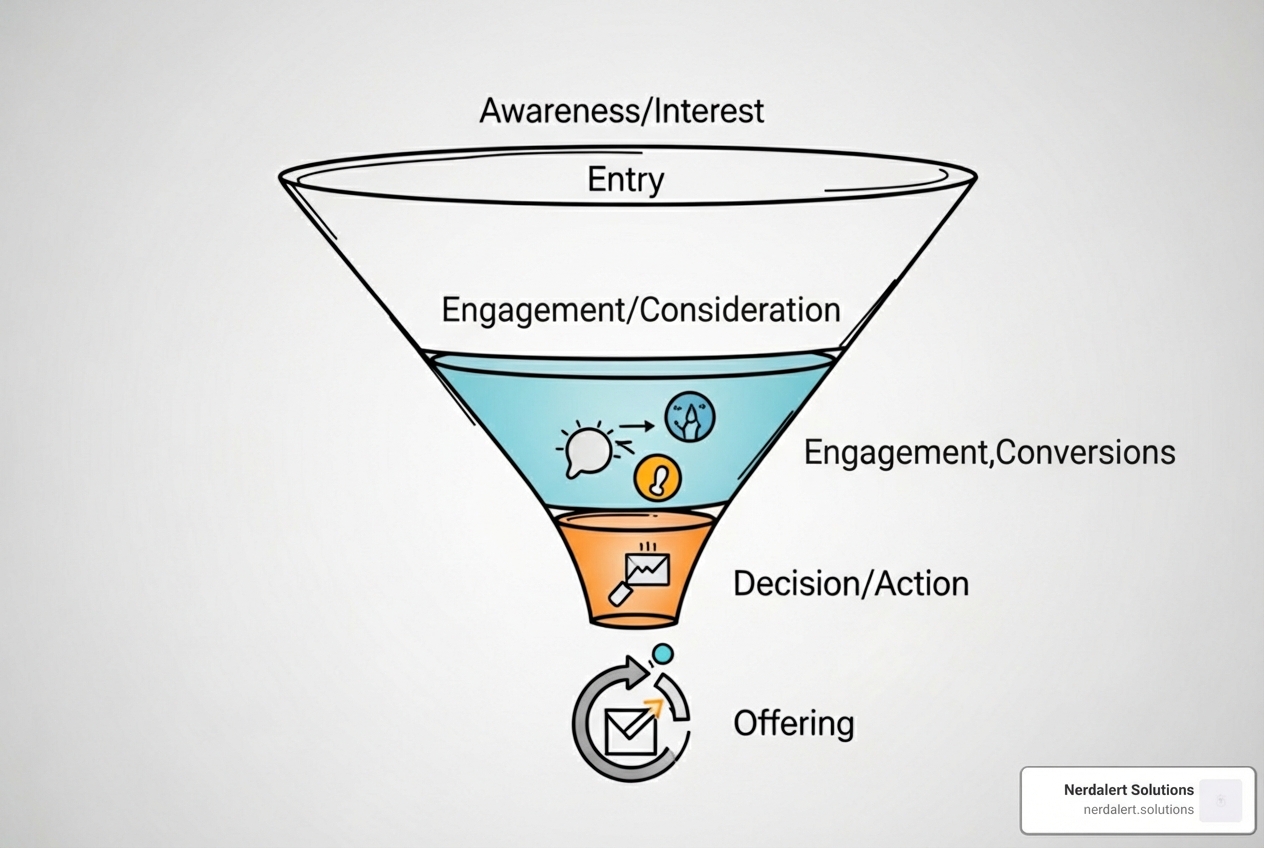
Let’s start with the basics. What exactly is a sales funnel? Simply put, a sales funnel is a strategic model that represents the journey potential customers take from first learning about your service to making a purchase decision. Think of it as a series of pages or interactions that psychologically guide visitors, step by step, to opt-in to your email list or sign up for your service. It’s like having your best salesperson guiding a prospect exactly where you want them to go, one step at a time.
Why is this essential for service-based businesses, especially when we’re trying to overcome that dreaded “feast or famine” cycle? A sales funnel provides a predictable path for client acquisition. It helps us filter out unqualified leads early on, allowing us to focus our precious time and resources on those most likely to convert into high-quality clients. This structured approach significantly increases the odds of long-term success and financial predictability, giving us peace of mind and more control over our business growth.
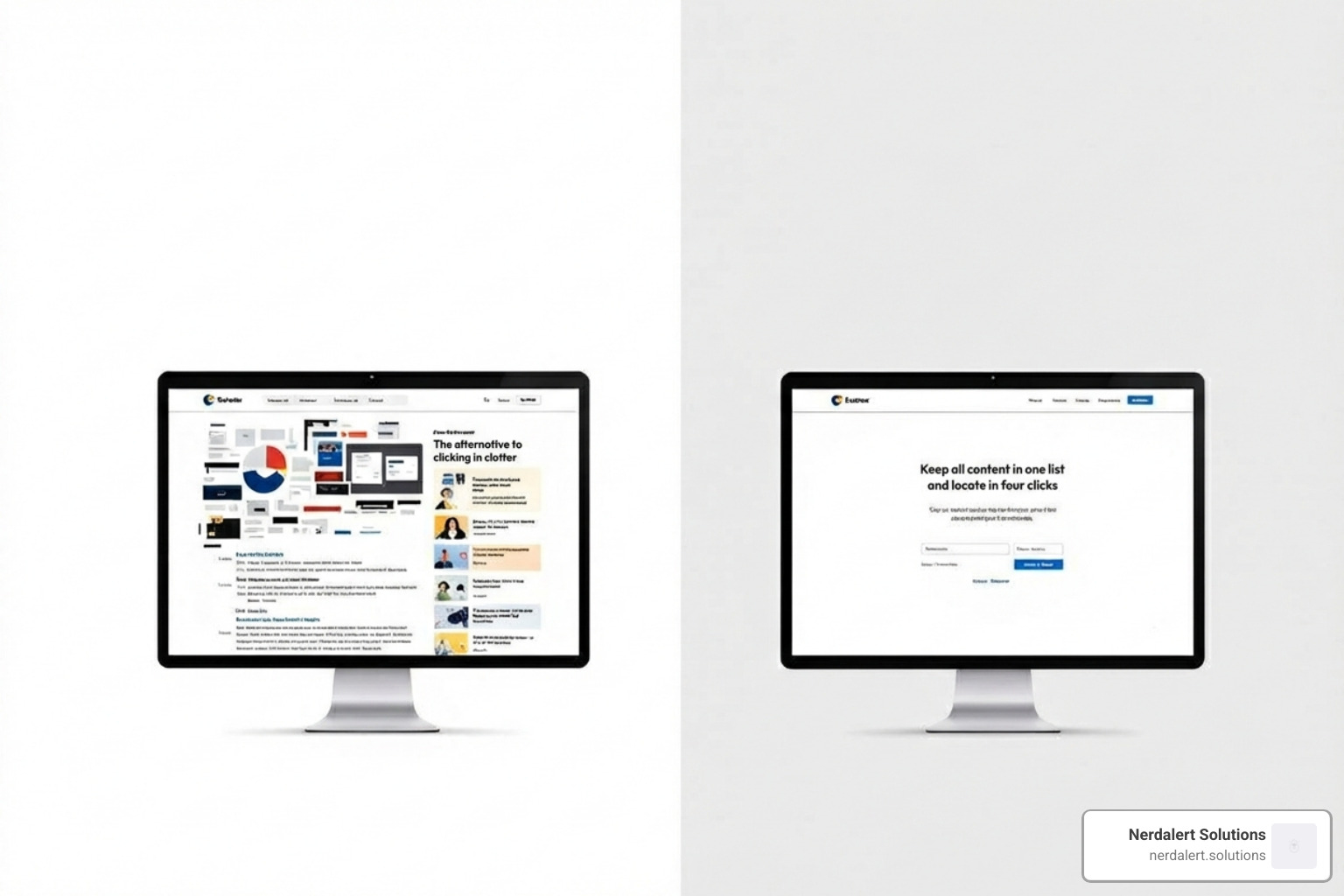
Now, you might be thinking, “But I already have a website!” And that’s great! A website is an important digital storefront. However, it’s crucial to understand how a sales funnel differs from a traditional website for service businesses. As our research shows, a website is often just a digital brochure. It’s a place where people can browse, learn about your business, and do pretty much whatever they want. While that sounds flexible, it can actually hurt your business’s growth because it gives visitors too many options. This “analysis paralysis” often leads to visitors leaving without taking any meaningful action.
Sales funnels, on the other hand, are designed with one primary goal in mind: to guide the visitor towards a specific action, whether that’s signing up for a free guide or booking a consultation. This focused approach leads to much higher conversion rates than a traditional website. Instead of a general information hub, a sales funnel acts as a guided path, leading potential clients directly to the solution they need. If you’re looking for more about effective web design, we can help you build that foundational presence too. But remember, for direct conversions, a funnel is king. It’s quite telling that at least 68% of B2B businesses do not work with identified sales funnels, missing out on this powerful conversion tool.
The 4 Key Stages of a Service Business Sales Funnel
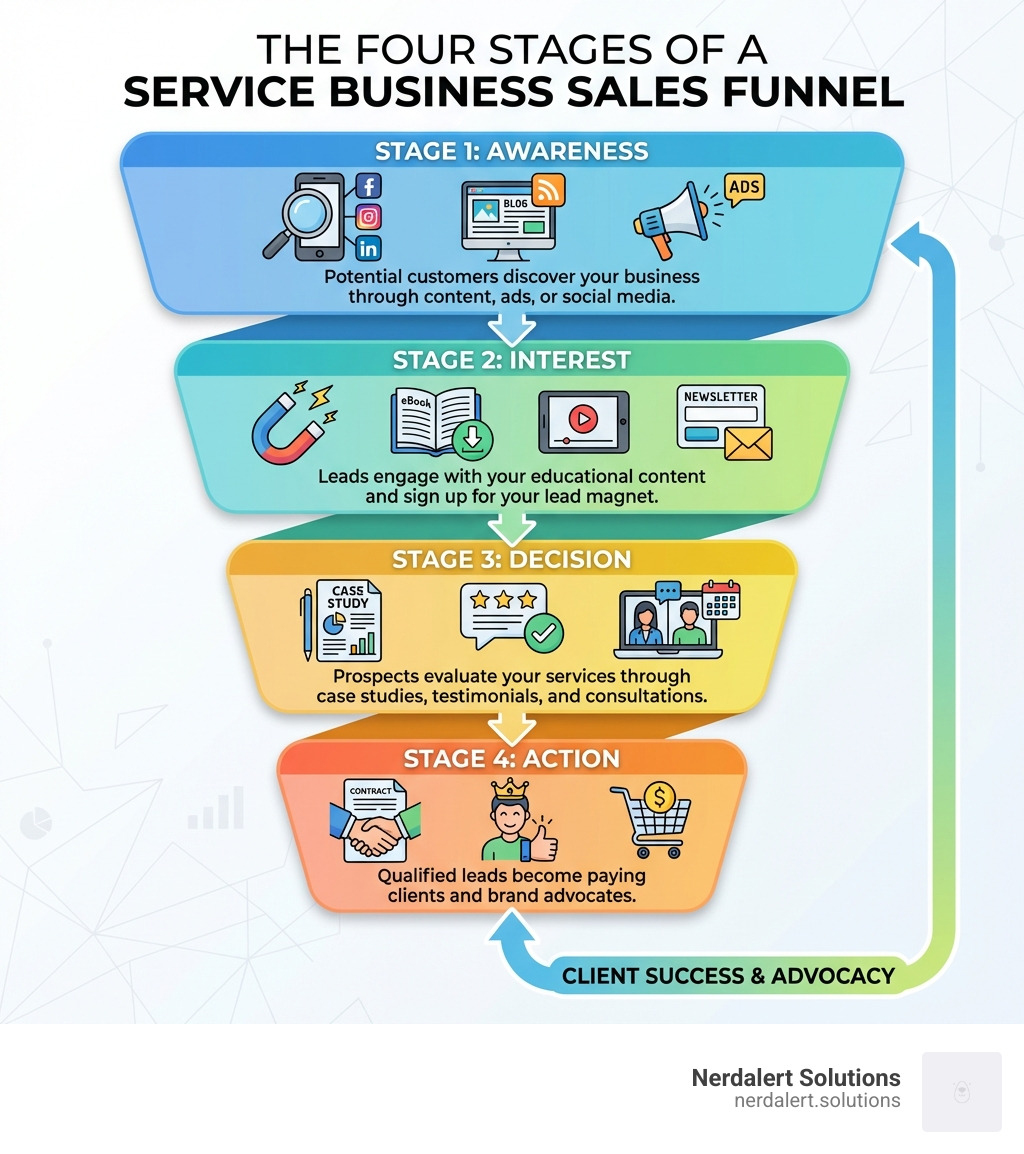
Every sales funnel, whether for a product or a service, typically follows a progression that mirrors the customer’s journey. We often categorize these as Top of Funnel (TOFU), Middle of Funnel (MOFU), and Bottom of Funnel (BOFU). While some models break it down further, for service businesses, we find a four-stage approach most effective, allowing us to tailor our messaging to the customer’s mindset at each stage:
-
Awareness (Top of Funnel): This is where potential clients first find your business. Our goal here is to attract attention, build initial trust, and make a great first impression. At this stage, the website visitor knows your brand (or is just finding it) and wants to understand their problem better. We’re not selling yet; we’re educating. Content for this stage includes:
- Educational blog posts (e.g., “5 Signs Your Business Needs a New Website”).
- Engaging social media posts and videos that address common pain points.
- Informative articles or guides that position us as experts.
- Paid advertising (PPC) or social media marketing (SMM) campaigns to broaden reach.
- SEO Services to ensure our content is found by those searching for solutions.
-
Interest & Evaluation (Middle of Funnel): With their interest piqued, these people will spend some time getting to know more about our company and our offerings. They’re researching solutions to their problems and comparing options. Our goal is to turn prospects into leads by engaging them further, demonstrating our expertise, and nurturing the relationship. This is where we provide more in-depth, valuable content:
- Free e-books or whitepapers (e.g., “The Ultimate Guide to Digital Marketing for Local Businesses”).
- Webinars or online workshops that offer actionable advice.
- Case studies or success stories demonstrating how we’ve helped similar clients.
- Detailed service descriptions that highlight benefits, not just features.
- Free assessments or self-audit tools.
-
Decision (Bottom of Funnel): Armed with knowledge, prospects are now seriously considering a purchase. They’re weighing their options and need that final push. This is where we work to convert leads into opportunities. The prospect has almost decided to purchase our product or service, and we need to highlight our unique value proposition and address any lingering doubts. Content and offers for this stage include:
- Testimonials, reviews, and client success stories to build social proof.
- Free consultations or findy calls to discuss their specific needs.
- Limited-time offers or incentives to encourage action.
- Detailed proposals that clearly outline the scope, benefits, and ROI.
- free trials are an excellent sales strategy, effectively lowering the cost of new-customer acquisition.
-
Action & Retention (Post-Funnel): The sale stage is not the end of the sales funnel; it’s the beginning of a long-term relationship. Once a prospect becomes a client, our focus shifts to ensuring a smooth onboarding process, delivering exceptional service, and turning them into loyal advocates. We also look for opportunities to upsell or cross-sell additional services. Existing customers spend up to 31% more than new customers, making retention a crucial part of our strategy. Activities here include:
- Seamless onboarding processes and welcome kits.
- Ongoing communication and support.
- Client success programs and check-ins.
- Surveys to gather feedback and improve services.
- Offers for complementary services or retainer packages.
How to Build a Sales Funnel for a Service Business: A Step-by-Step Guide
Building a sales funnel doesn’t have to be a very time-intensive effort. The easiest way to plan a high-converting sales funnel is to start by deciding on your “bullseye” service and ideal customer, then work backward. Think of it like creating a “value ladder” – a series of offerings that increase in price and value, guiding clients from a low-commitment entry point to your premium services. This approach helps us create a clear, step-by-step path for clients, ensuring we’re always providing value while moving them closer to a purchase. For a deeper dive into the strategic aspects, check out an essential guide to building a digital marketing funnel.
Step 1: Define Your Ideal Client and Create a Compelling Lead Magnet
Before we build anything, we need to know who we’re building it for. Identifying our Ideal Customer Profile (ICP) is crucial for tailoring our sales funnel to engage with our target audience effectively. An ICP is a detailed description of our most valuable customers, including their demographics, firmographics, and psychographics. A good sales funnel is built on deeply understanding our existing customers, their pain points, and their desires.
Once we know who we’re trying to reach, we can create a compelling lead magnet. A lead magnet is something of value we offer for free in exchange for a prospect’s contact information (usually an email address). It should provide a “quick win” related to our service offerings, solving a specific problem or answering a burning question. This helps us capture potential buyers’ attention and get them “through the door.” Examples include:
- Checklists (e.g., “Website Launch Checklist for Small Businesses”).
- Templates (e.g., “Social Media Content Calendar Template”).
- Short guides or mini-e-books (e.g., “The Beginner’s Guide to Local SEO”).
- Video tutorials or mini-courses.
For inspiration on creating visually appealing and valuable freebies, we often look to resources like designing a valuable freebie.
Step 2: Build a High-Converting Landing Page
Now that we have our ideal client and our irresistible lead magnet, we need a place to offer it. This is where a high-converting landing page comes in. Unlike a traditional website page with multiple navigation options, a landing page should have one single goal: to get the visitor to take the desired action (e.g., download the lead magnet).
A good landing page for a service business should be free of distractions and include:
- A Compelling Headline: Grabs attention and clearly states the benefit.
- Persuasive Copy: Highlights the problem the lead magnet solves and the value it provides.
- Clear Call-to-Action (CTA): A prominent button (e.g., “Download Now,” “Get Your Free Guide”).
- Social Proof: Short testimonials or trust badges (optional but powerful).
- Minimalist Design: Focuses the visitor’s attention on the offer.
Each page of our sales funnel should be trying to accomplish one piece of that goal. This focused approach is key to success. To learn more about optimizing these crucial pages, explore how effective landing page design boosts sales.
Step 3: Drive Targeted Traffic to Your Funnel
What good is a sales funnel without traffic? This is where we get the “right traffic”—our dream customers—to our beautifully crafted landing page. We need to identify where our ideal clients “hang out” online and then strategically place our message there.
One effective strategy is the “Dream 100” concept. This involves identifying 100 influencers or platforms that already have the attention of our target market. Then, we work to get in front of those audiences, either through paid advertising or by building relationships with those influencers.
Here are some ways we drive targeted traffic:
- Content Marketing: Creating valuable blog posts, videos, or podcasts that answer our ideal clients’ questions and naturally lead them to our lead magnet.
- Social Media Marketing: Sharing engaging content and directing followers to our landing page. This can be organic or through targeted paid ads on platforms like Facebook or LinkedIn.
- Paid Advertising (PPC): Running targeted ads on Google, social media, or other relevant platforms to quickly get our offer in front of a specific audience.
Whether we opt for organic growth through content and SEO or accelerate with paid campaigns, the key is consistency and targeting.
Automate, Optimize, and Avoid Common Mistakes
Building and implementing a sales funnel is an ongoing process. Experienced marketers are constantly tweaking their funnels, and we do too! It’s not a “set it and forget it” system. Continuous improvement, A/B testing different elements (headlines, CTAs, email subject lines), and tracking key metrics are vital for maximizing our conversion rates, managing lead costs, and ultimately boosting our Customer Lifetime Value (CLV).
How to build a sales funnel for a service business with email automation
Once a prospect opts-in for our lead magnet, the real magic of automation begins. This is where we leverage email service providers to build a relationship and move them further down the funnel.
Our email automation typically involves:
- Welcome Sequence: Immediately delivers the lead magnet and introduces our brand.
- Nurture Campaign: A series of automated emails (usually 5-7 days) that provide additional value, share relevant tips, address common objections, and showcase our expertise. This builds trust and positions us as the go-to solution. Studies show that nurtured leads can increase spending by as much as 47% compared to non-nurtured leads.
- Segmentation: We segment our email list based on how people signed up or what content they engaged with. This allows us to send highly relevant messages.
- Pitching Your Service: Once we’ve provided significant value and built trust, we can introduce our services with a clear call to action, such as booking a findy call or requesting a proposal.
Email marketing provides direct access to our audience, allowing us to personalize communication and automate much of the nurturing process.
Common (and Costly) Funnel Building Mistakes to Avoid
Even with the best intentions, it’s easy to stumble when building a sales funnel. Here are some common mistakes we see and actively help our clients avoid:
- Selling Too Soon: This is perhaps the biggest sin. Asking a “maybe” prospect to hire you immediately is like asking someone to marry you on the first date! We need to nurture, educate, and build trust first.
- Weak CTAs: If our calls to action aren’t clear, compelling, and specific, prospects won’t know what to do next. “Click Here” isn’t enough; “Book Your Free Strategy Session” is much better.
- Overcomplicating the Process: A sales funnel should be simple and intuitive. Too many steps or too much information on one page leads to confusion and drop-offs.
- No Follow-Up: The fortune is in the follow-up! If we don’t have an automated email sequence or a plan to re-engage leads, they’ll forget about us.
- Neglecting Mobile Optimization: A significant portion of traffic comes from mobile devices. If our funnel isn’t mobile-friendly, we’re losing potential clients.
- Not Tracking Results: If we don’t know what’s working (and what isn’t), we can’t improve. We must track conversion rates at each stage to identify leaks and optimize.
Examples of Successful Service Business Sales Funnels
Sales funnels are incredibly versatile and can be adapted to almost any service business. Here are a few examples that illustrate how different service providers can effectively build a sales funnel for a service business:
-
The Consultant/Coach:
- Awareness: Social media ads promoting a free webinar on a common business challenge.
- Interest: Prospect signs up for the webinar, provides email.
- Nurture: Automated email sequence delivers webinar replay, additional tips, and success stories.
- Decision: Email invites prospect to apply for a free 15-minute strategy call.
- Action: Prospect books strategy call, leads to a paid coaching program.
- Real-world insight: We’ve seen coaches use this model to attract high-ticket clients consistently.
-
The Local Service Pro (e.g., Contractor, Dentist):
- Awareness: Google Ads targeting local search terms (e.g., “kitchen remodel Riverside CA”), leading to a blog post “5 Things to Consider Before Your Kitchen Remodel.”
- Interest: Blog post offers a free downloadable “Kitchen Remodel Planning Checklist” in exchange for an email.
- Nurture: Email sequence provides home improvement tips, client testimonials, and showcases past projects in the local area.
- Decision: Email offers a “Free Project Estimate” or “New Patient Special” with a clear booking link.
- Action: Prospect books an estimate/appointment.
- Real-world insight: Doctors, chiropractors, dentists, gym owners, and real estate agents in areas like Los Angeles and San Diego have successfully implemented similar funnels.
-
The Creative Freelancer (e.g., Designer, Writer):
- Awareness: Instagram or Pinterest posts showcasing design work, linking to a blog post “How to Create a Brand Style Guide.”
- Interest: Blog post offers a free “Brand Style Guide Template Kit” for email signup.
- Nurture: Email sequence shares case studies of successful branding projects, tips for consistent visual identity, and answers common design questions.
- Decision: Email invites prospect to book a “Brand Clarity Call” to discuss their project.
- Action: Prospect books a call, leading to a paid design project.
- Real-world insight: This model works well for creatives in competitive markets like Palm Springs, allowing them to stand out and attract their ideal clients.
Frequently Asked Questions about Building Sales Funnels
How long does it take to see results from a sales funnel?
The timeline for seeing results from a sales funnel can vary. If you’re using warm traffic (like referrals, existing social media followers, or an email list), you might see leads immediately. However, if you’re driving cold traffic (through ads or SEO), expect to gather data for 2-4 weeks before making major changes. Building and implementing a sales funnel is an ongoing process. According to industry research, most successful funnels require 3-5 iterations before reaching peak performance. So, be patient, analyze your data, and be ready to tweak and optimize!
Should I focus on my funnel or my website first?
If you don’t have a professional website yet, we recommend starting there. Your website serves as your credibility foundation that supports all your marketing efforts. It’s where potential clients can learn more about your services, see your portfolio, and understand who you are. Once you have those essential pages in place, then add targeted funnels for specific goals. A strong, professional website makes your funnels much more effective. Think of your website as your home base in places like Moreno Valley or Riverside; the funnels are specific pathways you build to guide visitors from various points to your front door.
What if my service is unique and doesn’t fit a standard model?
Don’t worry! Sales funnels are incredibly adaptable. These patterns work for most service businesses because they’re based on human psychology and how people make buying decisions, not specific industries. The key is adapting the messaging and offers to your specific service while keeping the basic structure simple. When in doubt, start with the “Lead Capture to Nurture” pattern, as it’s the most flexible. Focus on providing value, building trust, and guiding your prospects step-by-step. We’ve helped diverse service businesses, from specialized consultants to niche creative agencies, successfully build a sales funnel for a service business that fits their unique offerings.
Conclusion
The “feast or famine” cycle is exhausting, and it keeps far too many talented service business owners from reaching their full potential. By taking the time to build a sales funnel for a service business, you’re not just creating a marketing tool; you’re building a system for consistent leads, predictable revenue, and ultimately, more freedom.
At Nerdalert Solutions, we believe every service business, from the busy streets of Los Angeles to the serene landscapes of Palm Springs, deserves a robust system for client acquisition. We specialize in custom, data-driven strategies that help businesses like yours thrive. It’s time to stop hoping for clients and start attracting them with purpose.
Ready to take control of your business growth and transform your client acquisition process? Don’t let another month go by wondering where your next project will come from. Get started with our funnel building services today, and let’s build your client acquisition machine together!