
29 Jan
Why Your Dental Practice Needs a Review Strategy Today
Review management for dentists is the systematic process of requesting, monitoring, responding to, and leveraging patient feedback across online platforms to improve your practice’s reputation and attract new patients.
Quick Answer: Essential Steps for Managing Dental Reviews
- Claim your profiles on Google Business Profile, Healthgrades, Yelp, and Zocdoc
- Ask at the right time – when patients express satisfaction, before they leave
- Make it easy – send a direct review link via text within 30 minutes
- Respond to everything – thank positive reviews, address negative ones professionally
- Stay HIPAA-compliant – never confirm patient status or discuss treatment details
- Track your progress – monitor review volume, star rating, and response rate
Here’s the reality: while you’re focused on providing excellent dental care, your potential patients are scrolling through Google reviews right now. They’re comparing star ratings. They’re reading what others said about their experience. And they’re making decisions about whether to call your office or your competitor’s.
Nearly three out of four people (72%) say they would only consider a healthcare provider with four stars or higher. That single statistic should make every dental practice owner pay attention.
The good news? Most dental practices are terrible at asking for reviews. They either forget, feel awkward about it, or rely on hoping patients will do it on their own. This creates a massive opportunity for practices willing to implement a simple, consistent system.
This guide will show you exactly how to build that system. You’ll learn when to ask, what to say, how to respond (without violating HIPAA), and which platforms actually matter for attracting new patients to your practice.
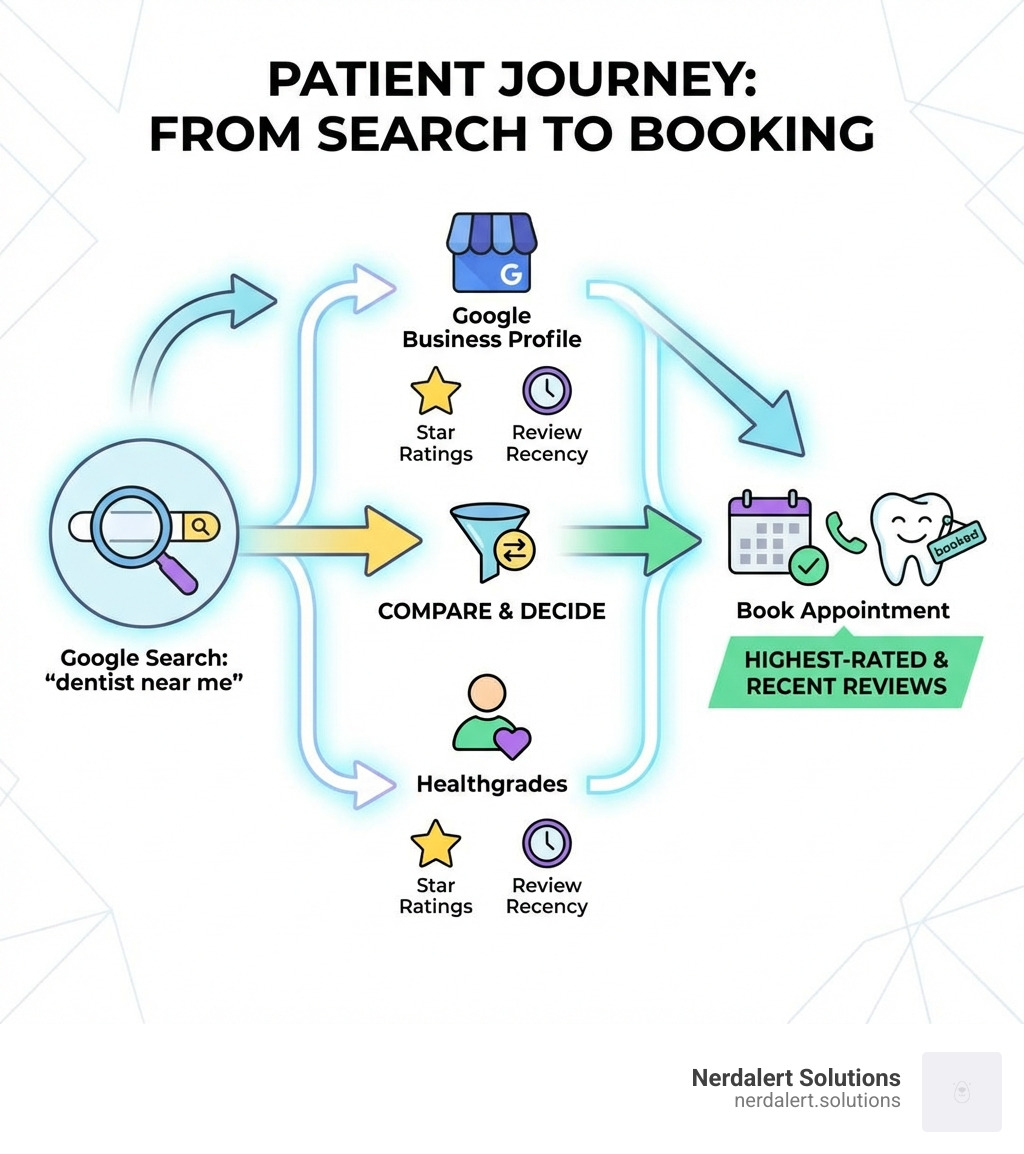
Review management for dentists terms you need:
Why Online Reviews are a Dental Practice’s Most Powerful Asset
Online reviews are no longer just a nice-to-have; they are a fundamental pillar of your dental practice’s success. Think of them as your digital word-of-mouth, amplified a thousandfold. For practices in busy areas like Riverside, Los Angeles, or San Diego, standing out is crucial, and reviews are your secret weapon.
Why are they so powerful? They influence everything from your visibility in local search results to a patient’s ultimate decision to book an appointment. The average person reads 10 reviews before feeling confident about a business. For a healthcare provider, where trust is paramount, this number can be even higher.
Reviews build social proof, which is essentially the idea that people will conform to the actions of others under the assumption that those actions are reflective of the correct behavior. When prospective patients see a flood of positive feedback for your practice, it signals quality, reliability, and an excellent patient experience. This translates directly into higher search rankings and increased patient acquisition. As we often say at Nerdalert Solutions, effective review management matters for your online reputation more than ever.
How reviews impact local SEO and search rankings
For any dental practice looking to attract new patients, appearing prominently in local search results is non-negotiable. When someone in Palm Springs searches for “dentist near me,” you want your practice to be at the top of that list. This is where review management for dentists truly shines.
Google’s local algorithm, which determines who shows up in the coveted Map Pack, weighs several factors: relevance, distance, and prominence. Reviews directly impact both prominence and relevance.
- Prominence Signals: The quantity and quality of your reviews are huge prominence factors. More 5-star reviews tell Google your practice is popular and trustworthy. Practices with 300+ Google reviews consistently outrank competitors in local search.
- Relevance Signals: When patients mention specific services (e.g., “dental implants,” “teeth whitening”) or even the dentist’s name in their reviews, it helps Google understand what your practice is relevant for.
- Review Velocity and Recency: Google doesn’t just care about the total number of reviews; it cares about how fresh they are. Consistent new reviews show search engines that your practice is active, responsive, and still delivering 5-star care. A steady stream of current reviews is a powerful local SEO signal. Even responding to reviews is a ranking factor for Google, signaling active management.
The role of reviews in building patient trust
Dental anxiety is real, and for many, choosing a new dentist can be a daunting task. Reviews offer a window into your practice, providing transparency and authenticity that traditional advertising simply can’t match.
Studies show that 80% of patients trust online reviews as much as personal recommendations. This is a staggering statistic, highlighting the profound influence reviews have. They help overcome patient anxiety by setting clear expectations about the environment, the staff’s demeanor, and the overall patient experience. When patients see others raving about your gentle touch, friendly front desk, or comfortable waiting room, it builds a crucial layer of trust even before they step through your door. As experts in digital marketing, we understand that the impact of online reputation on business success is undeniable.
Setting the Stage: Your Pre-Review Checklist
Before you even think about asking for reviews, your dental practice needs to lay a solid foundation. Imagine trying to build a skyscraper on quicksand – it just won’t work. The same applies to your online reputation.
This pre-review checklist ensures that when you do start actively seeking feedback, you’re set up for success, ready to receive and manage a steady stream of positive experiences.
Foundational steps for review management for dentists
The most crucial step in generating positive reviews is, quite simply, to deliver exceptional patient care. This might seem obvious, but it bears repeating: a truly 5-star experience naturally leads to 5-star reviews.
- Deliver 5-star service at every touchpoint: From the moment a patient calls your office in Los Angeles, to their check-in in Riverside, the treatment itself in San Diego, and their follow-up instructions in Moreno Valley, every interaction should be professional, compassionate, and efficient. Happy patients are your best advocates.
- Train your entire team: Every member of your staff, from the front desk to the hygienists and dental assistants, plays a role in the patient experience. They need to understand the importance of reviews and be equipped to identify “review moments” – those times when a patient expresses genuine satisfaction. Role-playing scenarios can help them feel comfortable and natural when asking.
- Set clear expectations and foster a positive office culture: A team that feels valued and understands the practice’s goals will naturally contribute to a better patient experience. Encourage staff to ask for reviews, and celebrate successes. This also includes ensuring your basic practice information is consistent everywhere online. We often work with clients on improving NAP consistency for Google My Business to ensure search engines have accurate information.
Claim and optimize your online profiles
Once your internal house is in order, it’s time to ensure your digital storefronts are sparkling. This means claiming and thoroughly optimizing your profiles on the most important review platforms.
Here are the top review platforms dentists in California should prioritize:
- Google Business Profile (GBP): This is the king. Google hosts 73% of all online reviews, and your GBP is often the first thing patients in Palm Springs see when they search for a dentist. Optimize it completely with high-quality photos, detailed service descriptions, accurate hours, and a clear call to action.
- Healthgrades: Patients specifically looking for healthcare providers often turn to Healthgrades, which boasts over 200 million patient reviews and ratings. Don’t ignore this platform; a well-optimized profile here can be a significant differentiator.
- Yelp: Despite what some dentists might think, 44% of consumers refer to Yelp for business reviews. While Yelp’s algorithm can be tough, having a presence and positive reviews here is still valuable, especially in competitive markets like Los Angeles.
- Zocdoc: This platform is unique because it allows patients to book appointments directly. Reviews on Zocdoc are specifically from verified patients, adding extra credibility. If you have appointment availability you’re struggling to fill, Zocdoc could be a game-changer.
- Facebook: Many patients check a practice’s Facebook page to get a feel for its personality and community engagement. Ensure your Facebook page is active, updated, and allows for reviews.
- U.S. News Health: Patients trust U.S. News due to its institutional ranking credibility. A strong profile here can improve your practice’s reputation.
- WebMD: With nearly 50 million monthly visitors, WebMD is a massive resource for health information. Patients researching dental symptoms often end up here, and an optimized profile can capture their attention.
- Vitals: This platform focuses specifically on healthcare providers and ranks well in Google searches. It emphasizes credentials and specializations.
- Dental Insider: Built specifically for dental practices, reviews here carry more weight with patients actively researching dental care.
- 1-800-DENTIST: Despite the dated name, it still drives significant patient volume, particularly for urgent needs or new residents.
For each platform, ensure:
- NAP Consistency: Your Name, Address, and Phone number are identical across all listings. Inconsistencies confuse search engines and potential patients.
- High-Quality Photos: Showcase your modern office, friendly staff, and smiling patients.
- Detailed Service Descriptions: Clearly list all the services you offer, from routine cleanings to cosmetic dentistry and specialized procedures.
- Accurate Hours: Keep your operating hours up-to-date, especially for holidays.
The Ultimate Playbook for Smart Review Management for Dentists
Now that your foundation is solid, it’s time to dive into the active strategies for collecting and managing reviews. This is where the rubber meets the road, turning satisfied patients into powerful online advocates.
How to effectively ask patients for reviews
Asking for reviews can feel awkward, but it doesn’t have to be. The key is to make it easy, timely, and polite. The latest data shows that 96% of consumers are open to writing a business a review!
- In-Person Requests: This is often the most effective. Train your team to identify “review moments” – when a patient expresses genuine happiness or relief after a procedure. A simple, “We’re so glad you had a great experience today! If you felt comfortable sharing your feedback online, it would really help other patients find us,” can go a long way.
- Timing the Ask: The sweet spot for requesting a review is immediately after a positive experience, before the patient leaves the office or within an hour of their appointment. Positive emotions fade quickly, so capture that sentiment while it’s fresh.
- Automated SMS/Email Requests: Leverage technology to automate requests. Send a personalized text message or email 15-30 minutes after an appointment with a direct, shortened link to your preferred review platform (usually Google). This removes friction and makes it “stupid-easy” for patients.
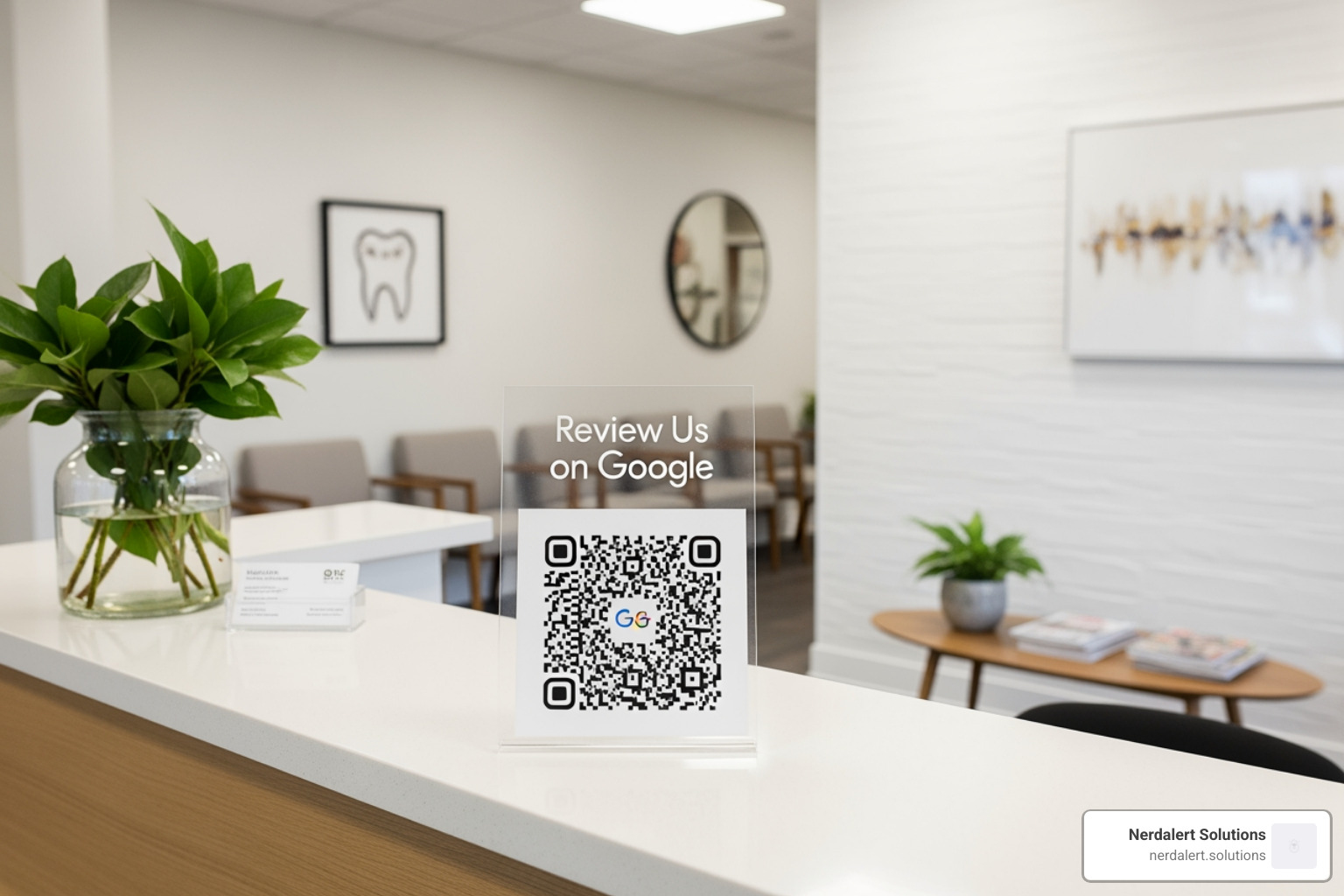
- QR Codes on Business Cards/In-Office Signage: Place QR codes on your appointment cards, brochures, or a tasteful sign at your front desk. Patients can simply scan with their phone and be taken directly to your review page.
- Website CTAs: Include clear calls-to-action on your website, perhaps on a dedicated “Patient Testimonials” page or in the footer, inviting patients to share their experience.
How to respond to positive and negative reviews
Responding to reviews is crucial; it shows you’re engaged and care about patient feedback. In fact, 36% of people said businesses set themselves apart when they respond to reviews publicly. We’ve even dedicated an entire guide to managing your Google reviews like a pro.
-
For Positive Reviews:
- Respond quickly and professionally.
- Thank the patient by name (if available).
- Acknowledge specifics they mentioned (e.g., “We’re thrilled you felt comfortable during your root canal!”).
- Reinforce your practice’s values.
-
For Negative Reviews:
- Respond promptly and professionally. Don’t let it fester.
- Empathize and apologize: “We’re truly sorry to hear about your experience. That is certainly not the standard of care we aim to provide.”
- Take it offline: Never get into a public debate. Invite them to discuss the issue privately: “Please call our office at the number listed on our profile so we can discuss this further and work towards a resolution.”
- Focus on service recovery: A well-handled negative review can turn a dissatisfied patient into a loyal advocate, and show potential patients that you care.
Navigating HIPAA when responding to reviews
This is perhaps the most critical aspect of review management for dentists. HIPAA (Health Insurance Portability and Accountability Act) protects patient health information, and you must be extremely cautious in your responses.
- Never confirm patient status: Do not acknowledge whether someone is or isn’t a patient. Use generic language like “Thank you for your feedback” or “We appreciate all comments.”
- Avoid discussing PHI (Protected Health Information): This includes treatment details, appointment times, or any specific health concerns. Even if a patient reveals their own PHI in a review, you cannot acknowledge or repeat it.
- Use generic, helpful language: Keep responses brief and general.
- Provide a private contact method: For negative reviews, always direct the person to call your office for a private discussion. This allows you to resolve the issue without violating patient privacy.
Here’s an example of a HIPAA-compliant response to a negative review: “Thank you for your feedback. We take all patient concerns seriously and strive for the highest quality of care. Please contact our office directly at the phone number listed on our profile so we can address your concerns privately.”
Systematizing Success: Technology, Metrics, and Leveraging Your Wins
Effective review management for dentists isn’t a one-time task; it’s an ongoing process that requires consistency and efficiency. This is where technology and smart data analysis come into play, helping you turn patient feedback into a powerful engine for practice growth.
Using technology to streamline review management for dentists
Managing reviews across multiple platforms can be time-consuming, especially for busy practices in areas like Moreno Valley. This is where technology becomes your best friend.
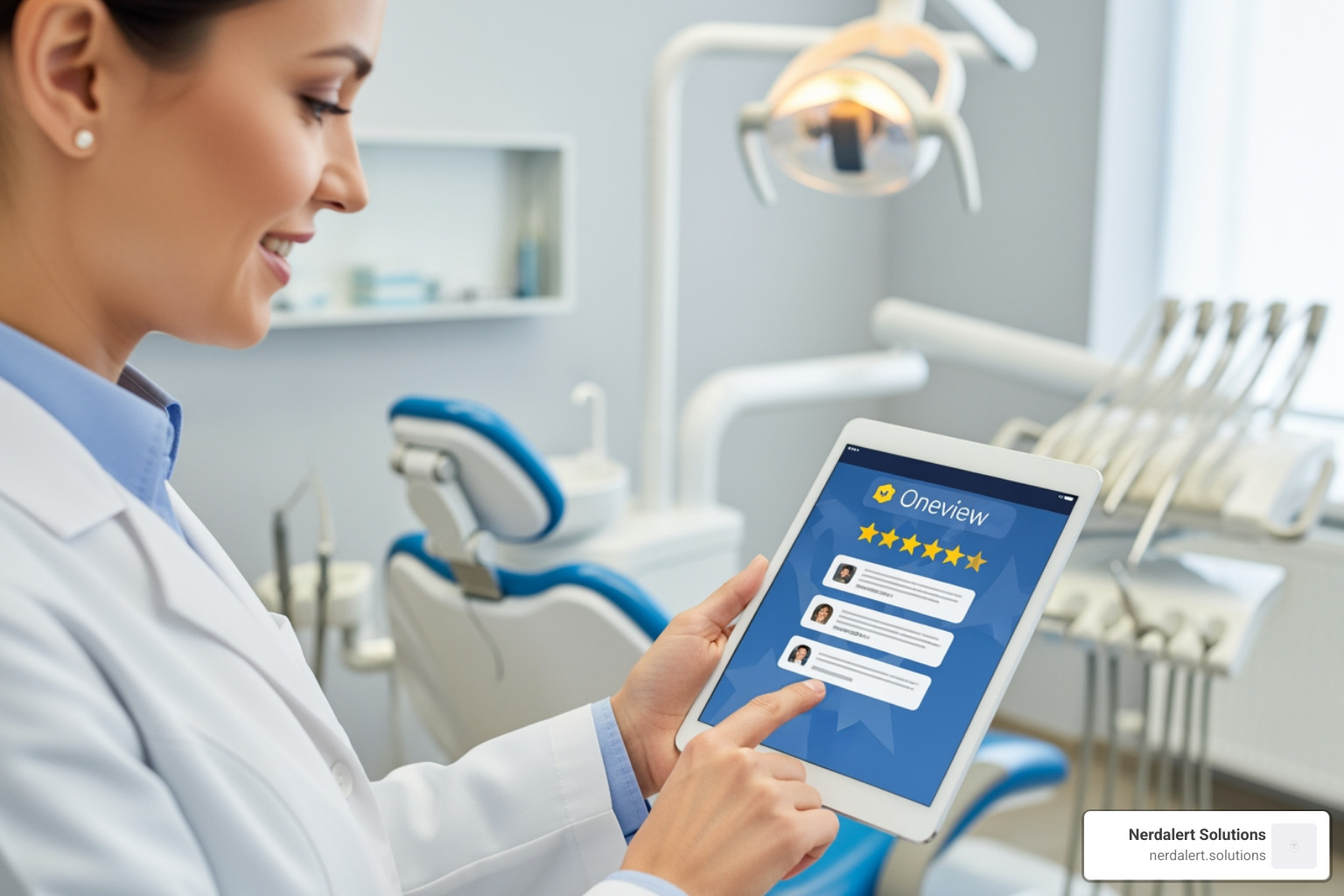
- Review Management Software: These platforms centralize all your reviews into a single dashboard. They allow you to monitor new feedback, respond directly, and even automate review requests via SMS or email. This streamlines the entire process, freeing up your team to focus on patient care.
- AI for Sentiment Analysis: Some advanced tools use AI to analyze the sentiment of reviews, helping you quickly identify trends, common complaints, or areas of excellence. This insight can be invaluable for continuous improvement.
- Automated Request Workflows: Integrate review software with your practice management system. Once a patient’s appointment is marked complete, an automated, personalized text with a direct review link can be sent. This removes the “awkward ask” and ensures consistency.
- Centralized Dashboard for Responding: Instead of logging into Google, Yelp, Healthgrades, and Facebook separately, a good review management tool lets you respond to all reviews from one place, ensuring prompt and consistent engagement.
As we’ve seen with many of our clients at Nerdalert Solutions, there are 6 benefits of effective online review management that technology can significantly improve.
How to leverage positive reviews for marketing
Positive reviews are marketing gold. Don’t let them sit idly on review sites; actively integrate them into your marketing efforts to amplify their impact.
- Website Testimonials: Create a dedicated “Patient Testimonials” page on your website. Feature glowing reviews, perhaps with patient photos (with permission), to build trust with new visitors.
- Social Media Quote Cards: Turn short, impactful snippets from 5-star reviews into visually appealing graphics. Share these “quote cards” on your Facebook, Instagram, and other social media channels.
- “Review of the Week” Posts: Highlight a particularly insightful or heartwarming review each week or month. This celebrates your patients and showcases your excellent service.
- Include Star Ratings in Ad Copy: When running digital ads for your practice in Los Angeles or San Diego, prominently display your average star rating. This instantly builds credibility.
- Google dental reviews as Marketing Assets: Google reviews directly impact your local SEO, drawing more organic traffic to your practice.
Key metrics for review management for dentists
To measure the success of your review management for dentists strategy, you need to track key metrics. This isn’t just about vanity; it’s about understanding what’s working and how your efforts are translating into new patients.
| Metric | Why it Matters | How to Track |
|---|---|---|
| Review Volume | How many reviews you have. Crucial for visibility, particularly for local SEO. | Your total review count on Google, Yelp, Healthgrades. |
| Average Star Rating | Your average rating across platforms. Directly impacts patient consideration (72% consider 4+ stars). | Sum of all ratings / count of reviews. |
| Response Rate | Percentage of reviews you respond to. Signals engagement to patients and Google. 88% more likely to choose businesses that respond. | Number of responses / total reviews. |
| Response Time | How quickly you respond. Faster responses show better customer service. | Average time taken to respond to reviews. |
| Review Velocity | How frequently new reviews come in. Key for local SEO ranking (recency matters). | Number of new reviews per week/month. |
| New Patient Mentions | How often new patients credit reviews. Direct measure of ROI for your review strategy. | Tracked via “How did you hear about us?” question. |
To truly understand the impact of your efforts, we recommend tracking review velocity – how many new reviews you’re getting each month. Practices that generate 50-100 reviews per month often see map pack improvements within 60-90 days. Always ask new patients “How did you hear about us?” to directly link your review efforts to patient acquisition.
Common pitfalls to avoid (and what to do instead)
Even with the best intentions, it’s easy to stumble in review management for dentists. Avoiding these common pitfalls will save you headaches and ensure your strategy is effective.
- Incentivizing Patients for Reviews: This is a big no-no. Offering discounts, gift cards, or free services in exchange for reviews violates the terms of service of major platforms like Google and Yelp. It can lead to penalties, removal of reviews, and erodes trust. Instead, focus on providing such an exceptional experience that patients want to leave a review. You can, however, incentivize your team for successfully requesting reviews.
- Ignoring Negative Reviews: While tempting, ignoring negative feedback is a missed opportunity. As discussed, a professional, empathetic response can demonstrate your commitment to patient care and even turn a negative into a positive.
- Inconsistent Asking: A sporadic approach to asking for reviews will yield sporadic results. Build review requests into your daily workflow, making it a habit, not an occasional campaign.
- Responding Emotionally: When faced with a harsh or unfair review, it’s easy to get defensive. Take a deep breath. Craft a professional, HIPAA-compliant response that addresses the core issue without getting into a public argument.
- Buying Fake Reviews: This is a fast track to disaster. Review platforms have sophisticated algorithms to detect fake reviews, and getting caught can lead to severe penalties, including removal from search results. Authenticity is always the best policy.
For a deeper dive into avoiding these missteps, explore our resources on review management.
Frequently Asked Questions about Dental Review Management
What is the best way to get more Google reviews for my dental practice?
The best way to get more Google reviews for your dental practice is a combination of a timely, personal in-office ask and an automated text message. When a patient expresses satisfaction, have a team member politely ask if they’d be willing to share their experience online. Immediately after, send an automated text message (within 15-30 minutes of their appointment) with a direct, shortened link to your Google Business Profile review form. This minimizes friction and captures their positive sentiment while it’s fresh. Ensure your Google Business Profile is fully optimized and active, as this is where most patients in Riverside, Los Angeles, and San Diego will look.
Is it acceptable to offer incentives for dental reviews?
No, it is generally not acceptable to offer incentives (like discounts, gift cards, or free services) directly to patients in exchange for reviews. This practice violates the terms of service for major platforms like Google and Yelp, and can lead to penalties, including the removal of your reviews or even your business profile. It also undermines the authenticity and trustworthiness of your reviews. Instead, focus on providing such exceptional service that patients are organically motivated to leave feedback. However, you can incentivize your internal team for successfully requesting reviews, as this rewards their efforts in facilitating the process, not the patient for leaving a specific type of review.
How many reviews does a dental practice need?
While there’s no magic number, aim for a minimum of 50+ Google reviews to be competitive and establish credibility. The real goal is to have more recent, high-quality reviews than your direct local competitors in your specific area, whether that’s Palm Springs or Moreno Valley. Consistent monthly growth (aiming for 50-100 new reviews per month if possible) is more important than a static high number, as review recency is a significant factor for local SEO. Practices with 100+ reviews are often in the top tier, and those with 200+ reviews have been shown to generate twice as much revenue as those with fewer.
Conclusion
In the competitive landscape of modern dentistry, review management for dentists is not just a marketing tactic—it’s a critical growth engine. From enhancing your local SEO and boosting your visibility in Google’s Map Pack to building invaluable patient trust and attracting new patients, a systematic approach to reviews is indispensable.
We’ve explored the foundational steps, the most effective asking strategies, the nuances of responding (especially with HIPAA in mind), and how to leverage technology and metrics to your advantage. The key takeaway is consistency: make review generation a habit, not a chore, and integrate it seamlessly into your daily operations.
At Nerdalert Solutions, we understand the unique challenges dental practices face in our Southern California communities. We specialize in crafting custom, data-driven strategies that consistently boost our clients’ Google rankings and generate high-quality leads. Let us help you take control of your online reputation and turn your satisfied patients into your most powerful marketing asset.
Learn more about our comprehensive review management services and let’s brush up your practice’s online presence together.